
BLOG

Why Intercity Buses Require High-Reliability Cable Harness Systems

Modern intercity buses are no longer simple mechanical vehicles. Today’s buses integrate a wide range of electronic systems, including vehicle control units, battery management systems, braking electronics, communication networks, and passenger service equipment. These systems rely on a complex electrical architecture to operate safely and efficiently.
As a professional wire harness manufacturer based in Taiwan, Yacenter Electric Co., Ltd. provides a wide range of bus cable harness and electric bus wire harness solutions for vehicle manufacturers and system integrators worldwide. With extensive experience in automotive wiring systems, the company supports both standard and OEM custom harness production for bus and electric bus platforms.
Yacenter offers various harness assemblies used in modern bus electrical systems, including main bus wire harnesses, ECU control harnesses, battery system harnesses, high-voltage harnesses, CAN communication harnesses, chassis harnesses, and instrument panel harnesses. These solutions are designed to support the increasingly complex electrical architecture of modern intercity and electric buses.
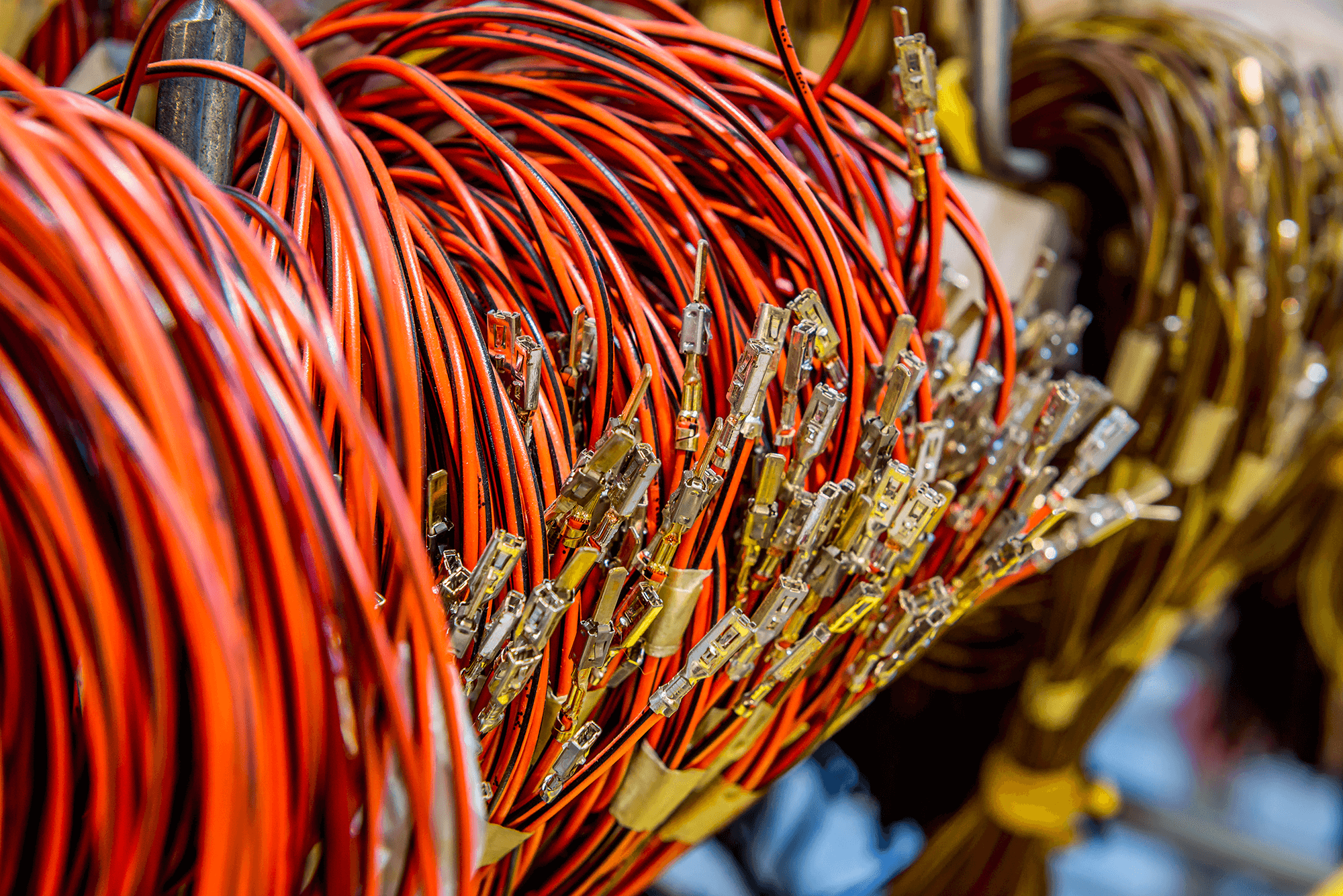
At the center of every modern vehicle electrical system is the bus cable harness — the structured network of wires, connectors, and protective components that distribute electrical power and signals across the entire vehicle.
The Electrical Backbone of Modern Intercity Buses
A bus cable harness functions as the electrical backbone of the vehicle. It connects electronic modules, sensors, actuators, and power systems to ensure reliable operation of all vehicle functions.
In traditional diesel buses, wiring harnesses support essential systems such as lighting, dashboard electronics, braking systems, and vehicle monitoring systems. However, modern intercity buses and electric buses now contain far more advanced electronics, significantly increasing the importance of high-quality wiring harness systems.
Typical systems supported by bus cable harnesses include:
- Electronic control units (ECU)
- Vehicle control systems (VCU)
- Battery management systems
- Electric drivetrain systems
- Braking and safety systems
- CAN communication networks
- Passenger service electronics
Without a properly designed cable harness system, these electronic components cannot function reliably or communicate effectively.
Because intercity buses often operate for long hours and travel long distances, the cable harness must be engineered to withstand vibration, temperature changes, humidity, and other challenging operating environments.
Key Requirements for Bus Cable Harness Systems
To ensure reliable performance in demanding transportation environments, a bus cable harness must meet several important design requirements.
1. High Durability for Long-Distance Operation
Intercity buses typically run continuously for long routes and accumulate high mileage. Their wiring harness systems must maintain stable electrical connections despite constant vibration and mechanical stress.
Durable insulation materials, secure connectors, and proper harness routing help ensure long-term reliability.
2. Reliable Power Distribution for Electric Buses
Electric buses rely heavily on electrical power systems. Components such as battery packs, traction motors, and power distribution units require stable and secure electrical connections.
A well-designed electric bus power harness ensures efficient power delivery between:
- Battery systems
- Motor controllers
- Power distribution units
- Charging systems
This helps prevent overheating, voltage loss, and system failures.
3. Stable Communication Networks
Modern buses use multiple electronic control modules that communicate through CAN bus networks. These communication systems require specialized bus CAN wire harnesses that ensure stable signal transmission across the vehicle.
Reliable communication harnesses are essential for coordinating vehicle systems such as braking, motor control, and battery management.
4. High Voltage Safety
Electric buses use high-voltage electrical systems that require specialized insulation and shielding. High-voltage cable harnesses must be designed to maintain electrical safety while preventing electromagnetic interference.
Proper harness design ensures safe operation of high-power systems in electric buses.
Common Bus Cable Harness Types in Modern Buses
Modern buses require multiple wiring harness systems to support different electrical subsystems. Below are some typical bus cable harness types used in intercity and electric buses.
| Bus Cable Harness Type | Application |
|---|---|
| Main Bus Wire Harness | Connects major electrical systems throughout the vehicle |
| Electronic Control Harness | Supports electronic modules and control units |
| ECU (VCU / PDU / BCU) Wire Harness | Connects vehicle control systems and power management units |
| Battery Power System Harness | Links battery packs and power distribution systems in electric buses |
| Power and Control Wire Harness | Transfers electrical power and control signals |
| Chassis Wire Harness | Distributes electrical connections across the vehicle frame |
| Instrument Panel Wire Harness | Connects dashboard displays, switches, and control components |
| Motor Control Wire Harness | Supports electric drivetrain control systems |
| CAN Wire Harness | Enables communication between vehicle electronic modules |
| High Voltage Wire Harness | Designed for electric bus high-power electrical systems |
| ABS / EBS Wire Harness | Connects braking control systems |
| Fuse Box Wire Harness | Connects vehicle electrical protection systems |
| Gearbox Wire Harness | Supports transmission control systems |
| Bus Bell Wire Harness | Connects passenger request and notification systems |
Each of these harnesses plays a specific role in ensuring reliable vehicle operation and system communication.
The Importance of Professional Bus Wire Harness Manufacturing
Designing bus cable harness systems requires extensive knowledge of vehicle electrical architecture. A professional manufacturer must consider multiple factors when developing wiring harness solutions, including:
- Electrical load capacity
- Environmental protection requirements
- Connector reliability
- Vehicle installation space
- Long-term durability
Proper harness design ensures easy installation, stable electrical performance, and reduced maintenance requirements for bus operators.
OEM Bus Cable Harness Manufacturing
Many bus manufacturers require customized wiring harness systems that match their specific vehicle platforms. This is why OEM cable harness manufacturing plays an important role in modern bus production.
OEM harness solutions allow manufacturers to optimize wiring layout, simplify installation, and improve overall system reliability.
Yacenter Electric Co., Ltd. provides flexible OEM wire harness manufacturing services, including:
- Customized harness design
- Prototype development
- Small batch production
- Mass production support
These capabilities allow bus manufacturers and electric vehicle developers to obtain cable harness solutions that perfectly match their vehicle architecture.
Conclusion
As buses become increasingly electrified and technologically advanced, the demand for reliable electrical systems continues to grow. The bus cable harness plays a critical role in connecting electronic modules, distributing electrical power, and enabling communication between vehicle systems.
High-quality cable harness design helps improve vehicle reliability, reduce maintenance costs, and ensure safe operation for intercity buses and electric buses.
With extensive experience in automotive wiring systems, Yacenter Electric Co., Ltd. provides professional bus cable harness and electric bus wire harness solutions for manufacturers worldwide. The company offers a wide range of harness systems and supports OEM customization to meet the specific requirements of modern bus platforms.
Bus manufacturers and system integrators seeking reliable cable harness solutions can work with Yacenter to develop customized wiring systems that support the next generation of intelligent and electric transportation.